
Most homeowners typically spend a few thousand dollars to around ten thousand for a complete home sauna, unit plus installation, and the type you choose moves you toward the lower or upper part of that range. Infrared cabins sit at the affordable end, and many wellness enthusiasts appreciate the benefits of infrared sauna use; traditional electric and outdoor barrel saunas occupy the middle, and custom steam builds push well past $10,000. Skip down to the cost-by-type table for exact bands, then check the install checklist before you sign anything.
TL;DR:
- Electrical setup costs can add $600 to $3,000 for traditional saunas and are often the largest hidden expense beyond the unit price.
- Site preparation, delivery, permits, and professional installation can increase overall costs by $1,000 to $4,000, especially for larger or built-in units.
- Monthly running expenses range from $0.25 to $0.75 per session for infrared and $1.25 to $2.50 for traditional electric, with savings accruing over years of frequent use.
- Budgeting should include five categories: the sauna unit, installation, electrical work, site prep, and ongoing costs, with each requiring detailed, itemized quotes.
- Infrared saunas generally cost less upfront and may need little to no electrical work, while traditional and built-in steam options involve higher initial and installation expenses.
Table of Contents
- How Much Does a Home Sauna Cost by Type?
- What Site and Install Costs Get Added to the Sticker Price?
- How Much Does It Cost to Run a Sauna Each Month?
- What Should You Budget Before Buying a Home Sauna?
- Where Elevate Performance Systems Fits Your Budget
- Why the Brochure Price Is the Wrong Number to Budget Against
- Get a Personalized Sauna Cost Estimate
- Sources
How Much Does a Home Sauna Cost by Type?
The unit price you see advertised is only part of the story, but it does set the baseline for everything else. Here’s how the major categories break down.
Infrared saunas are the entry point for most buyers. Compact 1 to 2 person kits start around $1,000 to $1,500 for bare-bones units, though quality units worth actually buying typically start closer to $1,999 to $3,500. Full installed pricing across the infrared category runs $1,500 to $7,000, according to a 2026 renovation cost breakdown. The reason infrared stays cheap has to do with electricity, not just materials: many models plug into a standard 120V household outlet, so you often skip the electrician entirely. Larger 3 to 4 person infrared cabins sometimes need a dedicated 240V circuit, which nudges the total up.
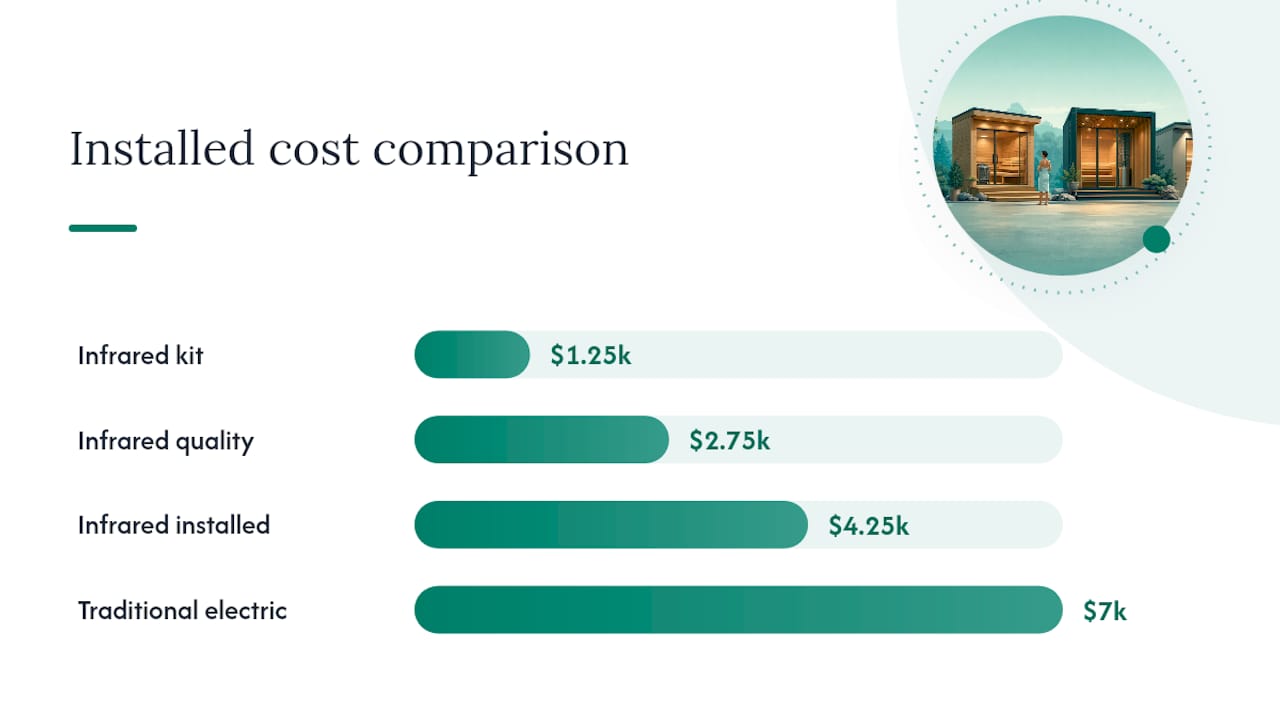
Traditional electric saunas cost more because the heater draws serious power. A 6 to 9 kW heater generally needs a 30 to 60 amp dedicated circuit, which means an electrician is not optional. Between the kit price and electrical work, traditional electric and outdoor installations commonly cost several thousand dollars. Buying a prebuilt room versus a DIY kit changes the math, too. Prebuilt cabins cost more upfront but save you framing and insulation labor.
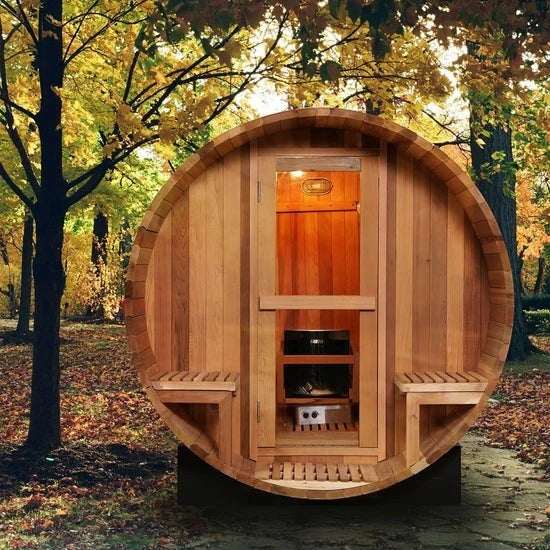
Outdoor barrel and cabin saunas have their own cost logic. The barrel itself, delivered flat or partially assembled, often lists around $4,000 to $8,000 for mid-range models, per retail pricing data from The Sauna Place. Add a gravel or concrete pad, delivery freight, and possibly a crane for placement on tricky lots, and installed totals track close to the traditional electric range above.
Built-in steam rooms and custom saunas are where costs balloon. Waterproofing an entire enclosure, running a steam generator, and tiling the interior are labor-intensive jobs that most installers do not do cheaply. Built-in steam projects typically cost ten thousand dollars or more, often reaching considerably higher amounts.
| Sauna type | Typical installed cost | Best for | Electrical requirement | Per-session running cost |
|---|---|---|---|---|
| Infrared cabin | $1,500–$7,000 | Small spaces, budget-conscious buyers | Often 120V plug-and-play | $0.25–$0.75 |
| Traditional electric | $4,000–$10,000 | Buyers wanting an authentic heat experience | 240V dedicated circuit | $1.25–$2.50 |
| Outdoor barrel | $4,000–$10,000 | Backyard installs, design appeal | 240V, plus site prep | $1.25–$2.50 |
| Built-in steam/custom | $10,000 or more | Full renovation projects | 240V, plumbing, ventilation | Varies with generator size |
What Site and Install Costs Get Added to the Sticker Price?
Installers who’ve walked through this process warn that the advertised price is often just the deposit. A line-by-line teardown of real quotes found that site and electrical work alone can add $1,000 to $4,000 above the unit price. Here’s where that money actually goes.
- Electrical work. A dedicated 240V circuit for a traditional heater typically runs $600 to $1,800. If your electrical panel is already at capacity, a panel upgrade adds another $1,500 to $3,000. Long cable runs or buried conduit for an outdoor barrel sauna push bids higher still, especially if the sauna sits far from the house.
- Foundation and site prep. A gravel pad works for many barrel saunas and costs the least. A concrete slab or paver base costs more but handles heavier cabins and improves drainage. Indoor builds need a moisture barrier and sometimes subfloor reinforcement.
- Delivery and access. Freight for a full barrel or cabin sauna can require a lift gate truck, and tight backyard access sometimes means a small crane or hoist, which adds a rental fee most buyers don’t budget for.
- Permits and ventilation. Indoor installations, especially built-in steam rooms, often require a permit and inspection. Municipal fees vary widely, but plan for a few hundred dollars and a delay while inspection is scheduled.
- Assembly or professional installation. Professional installation, per the same teardown analysis, generally costs $1,500 to $7,000 depending on complexity. Smaller infrared kits and prefabricated barrel saunas are realistic DIY projects for a handy homeowner; built-in steam rooms almost never are.
Pro Tip: Ask every vendor to itemize delivery, electrical, and permit fees separately before you commit. Dealer invoices sometimes bury tax miscalculations or hidden freight charges, and auditing the quote line by line is one of the few ways buyers actually recover overcharges.
How Much Does It Cost to Run a Sauna Each Month?
Running costs matter more than most buyers expect, especially if you plan to use the sauna several times a week for years. At a baseline electricity rate of $0.14 per kWh, infrared sessions typically cost $0.25 to $0.75, while traditional electric sessions cost $1.25 to $2.50, since the heater draws far more power to heat the air rather than your body directly.
- Three sessions a week: infrared adds roughly $3 to $9 monthly; traditional electric adds $15 to $30.
- Daily use: infrared runs about $8 to $23 monthly; traditional electric runs $38 to $75.
- Five-year ownership, all in: infrared totals $5,000 to $13,000; traditional electric totals $7,000 to $15,000; built-in steam totals $14,000 to $28,000 or more, combining purchase, install, and running costs.
Frequent users see infrared’s lower per-session cost compound into real savings over five years, but your regional electricity rate changes every number above, sometimes significantly.
What Should You Budget Before Buying a Home Sauna?
Break your budget into five buckets before you request a single quote. This keeps a low unit price from disguising a much higher final bill.
- Unit cost. The sauna itself, based on size and type.
- Delivery and assembly. Freight, lift equipment if needed, and labor to put it together.
- Electrical or chimney work. Circuit installation, panel upgrades, or venting for wood-burning models.
- Site prep and moisture control. Foundation, vapor barriers, and any flooring changes.
- Ongoing costs. Electricity, maintenance, and eventual heater replacement.
When you get a quote, ask the vendor directly: does this price include electrical work, or is that a separate contractor? Who pulls the permit, and is that fee included? What accessories, backrests, lighting, control panel, come standard versus extra? What are the delivery terms, and is there an access fee for difficult sites?
If your priority is lowest upfront cost, infrared wins. If you want the most authentic heat experience and don’t mind a higher electrical bill, traditional electric fits better. If capacity for multiple users matters, a larger cabin or barrel sauna makes more sense than a compact unit.
Pro Tip: A red flag worth watching for is any quote that lists a single lump sum with no breakdown. Ask the seller to separate unit, delivery, electrical, and permit costs in writing before you pay a deposit.
Where Elevate Performance Systems Fits Your Budget
Elevate Performance Systems builds its catalog around the same budget buckets covered above, rather than pushing one sauna type at every buyer. The company specializes in personalized recovery equipment, cold plunges, red light therapy, and saunas, matched to individual training goals, space, and budget instead of a one-size product line.
- The EMBER MINI SAUNA fits the compact, entry-level infrared bucket: a practical option for buyers who want lower upfront cost and minimal electrical work.
- The CEDAR HAVEN SAUNA sits in the mid-range indoor traditional category, built for buyers who want a more authentic heat session inside the home.
- The CEDAR RIDGE BARREL SAUNA covers the outdoor barrel category, suited to backyard installs where design and site prep both come into play.
For buyers weighing heater speed and electrical requirements against session experience, the guide to choosing a fast-heating sauna walks through how heat-up time and heater type affect both comfort and installation complexity. Regular sauna use also carries documented health associations worth factoring into value, particularly for buyers weighing a sauna against other recovery tools.
Why the Brochure Price Is the Wrong Number to Budget Against
The biggest mistake buyers make isn’t picking the wrong sauna type. It’s anchoring their entire budget to the unit price they saw in an ad, then treating every subsequent cost as a surprise. Electrical work, site prep, and delivery aren’t edge cases. They’re the default for most traditional electric and outdoor installations, and installers routinely see quotes balloon by $1,000 to $4,000 once those line items get added.
Conventional advice tells buyers to “compare sauna prices,” as if the unit cost were the whole decision. It isn’t. The real decision is between two entirely different cost structures: a low-friction infrared setup that often needs zero electrical work, or a traditional or built-in option that comes with a predictable, but real, installation bill attached.
Prioritize getting an itemized quote before you fall in love with a specific model. A $2,500 infrared cabin and a $2,500 traditional kit are not the same purchase once you add site costs. Know which bucket you’re actually budgeting for, then shop within it.
— Derek
Get a Personalized Sauna Cost Estimate
Comparing infrared, traditional, and barrel saunas on paper only gets you so far. What actually determines your cost is your space, your electrical setup, and how often you plan to use it, and that’s where a catalog built around fit rather than a single product line pays off. Eperformancesystems carries the compact EMBER MINI SAUNA for budget and space-conscious buyers, the CEDAR HAVEN SAUNA for a more traditional indoor heat experience, and the CEDAR RIDGE BARREL SAUNA for backyard installs.
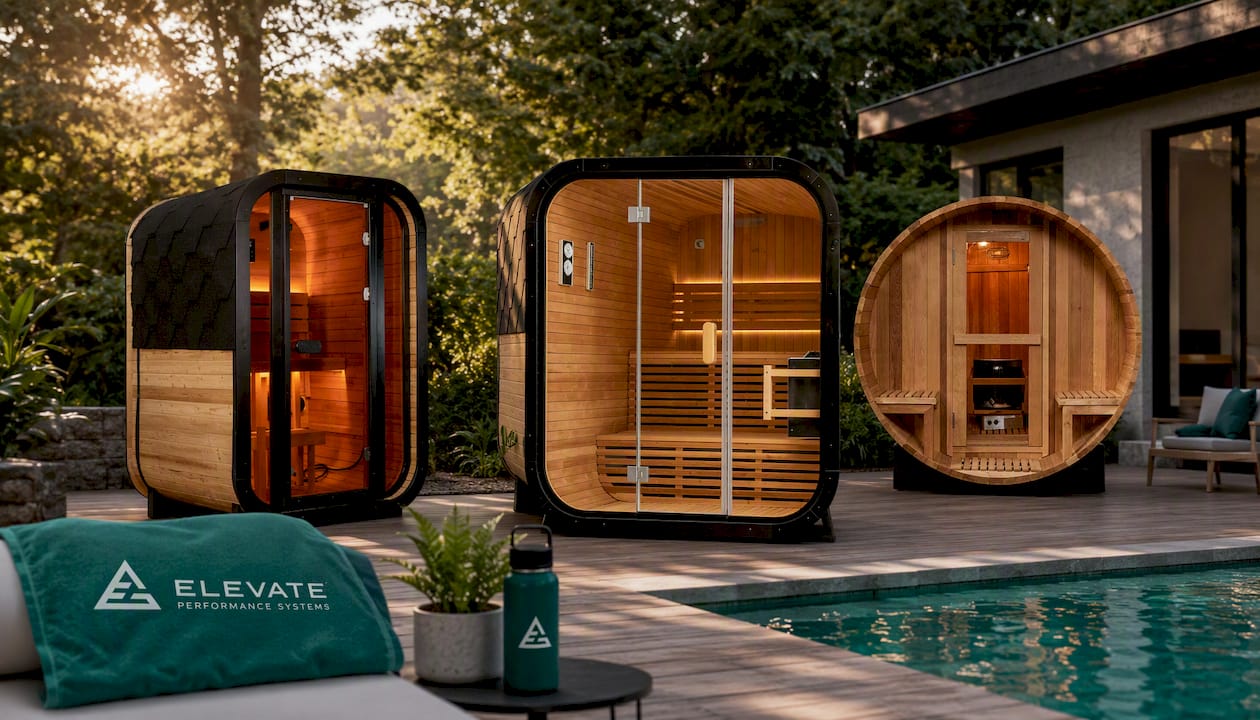
Browse the full sauna collection or request a personalized quote to see exactly how your space and budget map to a specific model before you commit to a purchase.
Sources
- The Real Cost of a Home Sauna in 2026: A Line-by-Line Teardown | Sauna Guide
- How Much Does a Sauna Cost - 2026 Full Price Guide | UseSauna
- How Much Does It Cost to Add a Home Sauna in 2026?
- Saunas and your health | Harvard Health