
Clinical research most consistently supports two bands: red light around 630 to 660 nanometers and near-infrared light around 830 to 850 nanometers. Red wavelengths work at the skin’s surface, while near-infrared reaches deeper into muscle and connective tissue, and the two absorb differently into mitochondria. The practical takeaway: choose a device that lists its exact wavelengths and reports irradiance, not just a vague “red light” label.
TL;DR:
- Devices should specify wavelengths close to 630-660 nm for red light and around 830-850 nm for near-infrared, with clear tolerance ranges for accurate targeting.
- Deeper tissue penetration occurs with longer wavelengths, making near-infrared more suitable for muscle recovery and deeper healing, while red light mainly benefits surface-level skin quality.
- Effectiveness depends on delivering appropriate irradiance and dose, which are affected by distance, session duration, and whether the device emits continuous or pulsed light.
- Clinical evidence supports red light for skin rejuvenation and hair growth, and near-infrared for wound healing and muscular recovery, but protocols vary and standardization is limited.
- Always verify device safety certifications, real wavelength data, coverage area, and established clinical references before purchasing to ensure proper dose and target tissue reach.
Table of Contents
- What Do Red Light Therapy Wavelengths Actually Mean?
- Why Do Red and Near-Infrared Light Reach Different Depths?
- Which Wavelengths Have the Strongest Clinical Evidence?
- How Do You Read Irradiance and Dose on a Spec Sheet?
- Is Red Light Therapy Safe, and What Does FDA Clearance Cover?
- Which Checklist Items Actually Predict a Good Device?
- Why Does the Same Wavelength Work Differently for Different People?
- Building a Wavelength-Aware Recovery Setup
- Which Eperformancesystems Devices Match These Wavelengths?
- Where to Verify the Research Behind Red Light Therapy
- Sources
What Do Red Light Therapy Wavelengths Actually Mean?
A red light therapy wavelength is measured in nanometers (nm), and it determines how far the light travels into your tissue and which cells respond to it. Get the wavelength wrong for your goal, and you’re aiming light at the wrong depth entirely.
The visible red spectrum runs roughly from 600 to 700 nm. Near-infrared light picks up around 700 nm and extends to about 1,100 nm, invisible to the naked eye but very much active in your tissue. Within those two bands, clinical devices and trials converge on a much narrower set of numbers.
Reviews of red light therapy devices consistently point to two clinical subranges: red light near 630 to 660 nm and near-infrared near 830 to 850 nm, often paired together in the same device. You’ll see 633 nm show up constantly in device tables and trial protocols, alongside 810, 830, and 850 nm on the near-infrared side. These aren’t arbitrary numbers. They cluster around wavelengths where key skin and muscle chromophores absorb light most efficiently.
Here’s where spec sheets get confusing. Manufacturers report wavelength in different ways, and understanding the difference matters before you buy anything:
- Nominal wavelength with tolerance: An LED rated at “660 nm ± 10 nm” actually emits a narrow band centered near 660 nm, not a single pure frequency. This is normal. LEDs, unlike lasers, emit a spread rather than one exact wavelength.
- Single-point values: Some sheets list one number (e.g., “660 nm”) without stating the tolerance. That’s not wrong, but it’s incomplete. Ask what the tolerance band is if it’s not listed.
- Dual or multi-wavelength devices: Panels combining red and near-infrared LEDs often list both, such as “660 nm and 850 nm,” because the diodes are physically separate and each emits its own band.
- Laser vs. LED: Low-level lasers emit a genuinely narrow, coherent beam at a fixed wavelength. LEDs emit a broader band. Most consumer and clinical panels use LEDs because they’re cheaper to scale across a large treatment area.
Why do some manufacturers report a span like “620 to 660 nm” instead of a single figure? Usually because the panel houses several LED types tuned slightly differently, or because the company is describing the therapeutic window the device targets rather than one diode’s exact output. Neither approach is inherently better, but a span with no stated peak wavelength is harder to compare against clinical trial data, which almost always cites a specific number like 633 nm or 810 nm.
When you’re reading a spec sheet, the goal is simple: find the peak wavelength (or wavelengths) and the tolerance range. If a product only says “red light” or “infrared” with no nanometer figure at all, you have no way to compare it against the most-studied therapeutic wavelength bands, and that’s a real gap in what the manufacturer is telling you.
Why Do Red and Near-Infrared Light Reach Different Depths?
Red light and near-infrared light behave differently in your body because of a simple optical rule: longer wavelengths scatter less and travel farther through tissue. That difference in penetration depth is the whole reason your skincare goals and your muscle recovery goals often call for different parts of the spectrum.
Red light in the 600 to 700 nm range mostly interacts with the epidermis and upper dermis, the layers where collagen-producing fibroblasts live and where surface pigmentation and fine lines show up. Near-infrared light, running from roughly 700 to 1,100 nm, pushes past those upper layers into deeper dermis, vasculature, muscle fibers, and connective tissue. UCLA Health’s summary of red light therapy explains that both bands fall within a 600 to 1,100 nm window associated with cellular energy shifts, but the practical effect depends heavily on how deep the light actually reaches.
At the cellular level, both bands are absorbed by cytochrome c oxidase, an enzyme inside your mitochondria that plays a direct role in producing ATP, the energy currency your cells run on. When red or near-infrared photons hit this chromophore, they appear to shift mitochondrial activity in ways linked to increased ATP output, modest reactive oxygen species signaling, and downstream effects on collagen synthesis and inflammatory pathways. This process, generally called photobiomodulation, is the mechanism behind nearly every claimed benefit of red and near-infrared light, from smoother skin to faster-feeling muscle recovery.
That mechanistic overlap explains why red light dominates cosmetic and skin-focused applications, while near-infrared shows up more often in recovery and deeper healing protocols:
- Red light (630 to 660 nm): Concentrated at the skin’s surface, where it’s linked to collagen stimulation, texture improvement, and reduced surface inflammation.
- Near-infrared light (830 to 850 nm): Reaches into muscle, joint tissue, and deeper vascular structures, associated with improved circulation and tissue-level recovery signals.
- Combined red and NIR devices: Deliver both depths in one session, useful when your goals span skin and deeper tissue rather than one or the other.
The working window for photobiomodulation research generally falls within the approximately 600 to 1,100 nm range, but the specific wavelength you choose inside that window changes what tissue actually receives meaningful dose. Scientific American’s review of the research behind red light therapy notes this range consistently, while also cautioning that wavelength alone doesn’t determine outcome. Intensity, session timing, and delivery method all interact with it.
This is also where the evidence for combining bands gets interesting. Several trials and device reviews report that pairing red and near-infrared wavelengths in a single protocol produces greater collagen density and reduced inflammation than either band delivered alone. The theory holds up biologically: red light drives surface-level fibroblast activity while near-infrared supports the deeper vascular and mitochondrial response, so a combined session covers more of the tissue depth where photobiomodulation actually happens. If your goals include both skin quality and muscle recovery, a dual-wavelength device gives you a mechanistic reason to expect broader coverage than a single-band panel.
None of this means wavelength works in isolation. A perfectly chosen wavelength delivered at too low an irradiance, for too short a session, will underperform a slightly less “ideal” wavelength delivered at an effective dose. Depth and target tissue set the ceiling on what’s possible. Intensity and time determine whether you actually reach it.
Which Wavelengths Have the Strongest Clinical Evidence?
The strength of the evidence varies quite a bit depending on what you’re trying to treat, and that’s worth knowing before you set expectations for any single device or protocol.
-
Skin rejuvenation. This is where red light in the 630 to 660 nm range has the most consistent trial support, typically in small to mid-sized studies measuring wrinkle depth, skin elasticity, and collagen density before and after multi-week courses of treatment. Results tend to show modest but measurable improvement in texture and fine lines, with combined red and near-infrared protocols outperforming red alone in some trials. The limitation is one of scale: most of these studies run small sample sizes over eight to twelve weeks, which is enough to show a signal but not enough to generalize confidently across skin types, ages, or baseline conditions.
-
Wound healing. Near-infrared wavelengths in the 800 to 870 nm range, sometimes paired with red light, show up repeatedly in wound-healing research tracking closure rate, tissue granulation, and reduced inflammation markers. The deeper penetration of near-infrared appears to matter here, since wound healing depends on vascular and connective tissue activity below the surface that red light alone doesn’t reach as effectively. An umbrella review of photobiomodulation trials found promising signals for wound healing and tissue regeneration across multiple meta-analyses, but flagged wide variability in how individual trials dosed and timed treatment, which makes it hard to state one universal protocol.
-
Hair growth. The strongest evidence here concerns androgenetic alopecia, using low-level laser or LED devices generally in the red range around 630 to 660 nm, delivered through combs, caps, or panels over months of consistent use. Multiple small randomized trials report increased hair density compared to control groups. As with skin studies, sample sizes tend to run small, and the umbrella review covering photobiomodulation broadly noted the same protocol inconsistency problem here that shows up in wound care: different studies test different session lengths, frequencies, and total treatment durations, which makes cross-study comparison difficult even when the wavelength choice is similar.
-
Muscle recovery and pain. This is arguably the most popular consumer use case, and it draws primarily on near-infrared wavelengths around 810 to 850 nm, often combined with red light in the same session. Trials generally measure perceived soreness, range of motion, or performance markers after exercise-induced muscle damage, with photobiomodulation groups often reporting less soreness and faster subjective recovery than placebo groups. The umbrella review of randomized trials placed pain reduction among the more consistently supported outcomes across the photobiomodulation literature, while still calling for higher-quality, more standardized studies before treating any single protocol as settled science.
Across all four categories, the pattern repeats: the biological mechanism is well described, the direction of the effect is generally positive, and the main gap is standardization. Study protocols differ enough in wavelength combination, dose, and session frequency that comparing across the literature requires some caution, even when the overall signal points the same way.
How Do You Read Irradiance and Dose on a Spec Sheet?
Two numbers matter as much as wavelength on any red light therapy spec sheet: irradiance and dose. Skip past them, and you’re guessing at your session length instead of calculating it.
Irradiance, measured in milliwatts per square centimeter (mW/cm²), tells you how much light power hits your skin at a given moment. Dose, measured in joules per square centimeter (J/cm²), tells you the total energy delivered over the full session. The relationship between them is straightforward: dose equals irradiance multiplied by time. If a panel delivers 50 mW/cm² and you sit in front of it for 10 minutes (600 seconds), you’ve received a dose of 30 J/cm² (50 mW/cm² × 600 seconds ÷ 1,000 = 30 J/cm²).
Why does that math matter to you? Because it lets you translate published trial doses into an actual session length for whatever device you own, instead of relying on a manufacturer’s generic “10 to 20 minutes” recommendation that may not match your panel’s actual output.
- Distance changes irradiance dramatically. Light intensity falls off sharply as you move away from the panel, which is why a trustworthy spec sheet states irradiance at a specific distance, such as “50 mW/cm² at 6 inches.” A number with no distance attached is close to meaningless.
- Pulse vs. continuous delivery changes the timing math. Continuous-wave devices deliver a steady stream of photons for the full session. Pulsed devices flash on and off at specific frequencies, which some research suggests may influence how tissue responds, though the clinical case for pulsing over continuous delivery is still less settled than the case for wavelength and dose themselves.
- Trial doses cluster in a fairly narrow band. Most photobiomodulation studies for skin and recovery use total doses within a moderate range per session, varying based on target tissue and depth, with skin-focused protocols generally on the lower side and deeper muscle and joint protocols higher.
- Coverage area matters as much as power. A high-irradiance panel that only covers a small patch of skin isn’t necessarily more useful than a lower-irradiance panel with a wide treatment area, if your goal is a full muscle group rather than a small localized spot.
Here’s a worked example. Suppose a panel is rated at 100 mW/cm² measured at 12 inches, and a published trial protocol for muscle recovery called for 20 J/cm². Divide dose by irradiance: 20 J/cm² ÷ 100 mW/cm² (0.1 W/cm²) gives you 200 seconds, or roughly 3.3 minutes, at that exact distance. Move closer or farther, and that number changes, which is exactly why distance-specific irradiance figures matter so much when you’re planning a real session rather than guessing.
Pro Tip: Start any new device at the lower end of its recommended dose range for the first one to two weeks, even if a published trial used a higher figure. Individual skin sensitivity and heat tolerance vary enough that a conservative ramp-up beats chasing the maximum dose on day one.
Is Red Light Therapy Safe, and What Does FDA Clearance Cover?
Red and near-infrared light therapy carries a relatively low risk profile compared to many other wellness interventions, but “low risk” doesn’t mean “no precautions needed.”
A few safety basics apply across nearly every device type. Eye protection matters, particularly with higher-irradiance panels, since direct exposure to bright red or near-infrared light at close range can cause discomfort or strain. People taking photosensitizing medications, including certain antibiotics and acne treatments, should check with a healthcare professional before starting sessions, since those drugs can amplify skin sensitivity to light. Pregnant individuals and anyone with an active skin condition should get personalized guidance rather than relying on generic device instructions. Some higher-powered devices generate real heat at close range, and burns are possible if a panel is used too close or for too long.
Regulatory clearance is where a lot of confusion sets in. In the United States, FDA 510(k) clearance means a device manufacturer demonstrated substantial equivalence to an already-legally-marketed device, and it establishes a baseline safety and device-classification standard. It does not mean the FDA has verified every specific therapeutic claim a company makes about that device, and it does not standardize dosing or protocol. You can check a device’s clearance status directly, but clearance and clinical efficacy for your specific goal are two separate questions.
Medical organizations add a useful layer of caution here. The American Medical Association’s guidance for patients notes that red light therapy should generally be treated as adjunctive care rather than a standalone cure, and that study quality varies enough across the field that skepticism toward bold claims is warranted. Small sample sizes, inconsistent protocols, and short follow-up periods are common limitations across the broader photobiomodulation literature, not signs that the mechanism itself is fake, just signs that the science is still maturing.
If you’re managing a diagnosed medical condition, talk to a healthcare professional before adding red light therapy to your routine, especially if you’re combining it with other treatments or medications.
Which Checklist Items Actually Predict a Good Device?
A red light therapy device is only as good as what its spec sheet actually tells you. Here’s what to check before you buy anything, in the order it matters most:
- Wavelength with stated tolerance. Look for a specific peak nanometer figure, ideally in the 630 to 660 nm and/or 830 to 850 nm ranges, with a tolerance band like “± 10 nm.”
- Irradiance at a stated distance. A number with no distance attached tells you almost nothing about real-world dose.
- Coverage area. Measured in inches or square feet, this determines whether you’re treating a small facial area or a full muscle group in one session.
- Recommended dose and session time. Ideally expressed in J/cm² alongside a suggested time, so you can verify the math yourself.
- Safety certifications. Confirm FDA clearance status or equivalent regulatory listing where applicable.
- Supporting clinical references. A manufacturer that cites the specific studies behind its wavelength choices is giving you something to verify independently.
Different checklist items matter more depending on your actual goal. Someone chasing facial skin texture cares most about wavelength precision and even coverage across a small, curved area, which is why a face mask design generally outperforms a flat panel for that specific job. Someone targeting deeper recovery after training sessions cares more about coverage area and irradiance at a working distance, since you’re treating a larger muscle group rather than a small facial zone.
Eperformancesystems built its red light therapy collection around this exact logic: match the device shape and spec profile to the goal, rather than expecting one universal panel to serve every use case equally well. Always check the current spec sheet for exact wavelength, irradiance, and dosing figures for the specific model you’re considering, since these details can be updated as products evolve.
Why Does the Same Wavelength Work Differently for Different People?
Wavelength selection isn’t a solved problem, and it’s worth being honest about where the science still has gaps.
Individual variability plays a bigger role than most marketing admits. Skin thickness, pigmentation, hydration level, and even local blood flow all affect how much light actually penetrates before it’s absorbed or scattered. Two people using the identical panel at the identical distance for the identical session length can end up with meaningfully different effective doses reaching their target tissue, simply because their tissue absorbs and scatters light differently.
Tissue absorption variability compounds this further. Melanin, hemoglobin, and water all compete with your target chromophores for the same photons, and the balance of those competing absorbers shifts from one body area to another and from one person to another. That’s part of why a wavelength that performs beautifully in a controlled trial with a specific participant population doesn’t automatically guarantee an identical result for every reader trying it at home.
Protocol inconsistency across the research itself adds another layer of difficulty. Trials testing supposedly similar wavelengths often differ in irradiance, session frequency, total treatment duration, and how outcomes get measured, which makes it genuinely hard to say “this exact number of J/cm² is optimal” for any given goal. The honest position is that clinical research has identified strong wavelength candidates and a coherent biological mechanism behind them, not a single universal dosing formula that works identically for every body.
Building a Wavelength-Aware Recovery Setup
Assembling a setup that actually matches your goals starts with an honest inventory, not a wavelength number. Ask what you’re actually trying to solve: skin texture and fine lines, post-training soreness, a nagging joint issue, or some mix of all three. That answer determines whether you need a device biased toward red light, one biased toward near-infrared, or a combined panel that gives you both.
Space and treatment time come next. A dedicated recovery room with room for a full-size panel supports a very different routine than a shared apartment where a compact unit has to live in a closet between sessions. Budget interacts with both. A combined red and near-infrared panel typically costs more than a single-band device, but it also covers more of the biological mechanism in one session, which matters if your goals span both skin and deeper tissue.
For anyone splitting time between skin goals and recovery goals, a combined panel used for muscle groups alongside a dedicated face mask for facial work tends to outperform trying to force one device to do both jobs well. The face mask’s curved design delivers more even coverage across facial contours than a flat panel held at an angle, while a full panel handles the larger surface area a mask simply can’t reach.
A reasonable starting routine looks like three to five sessions per week, roughly 10 to 20 minutes per area, adjusted based on how your skin and body respond over the first few weeks. Consistency across weeks tends to matter more than any single session’s exact dose, which tracks with how the underlying photobiomodulation research is generally designed and measured.
— Derek
Which Eperformancesystems Devices Match These Wavelengths?
Some companies build their device lineups around the same evidence-backed bands covered throughout this guide, so you’re not stuck reverse-engineering a spec sheet or guessing what “red light” actually means on a box.
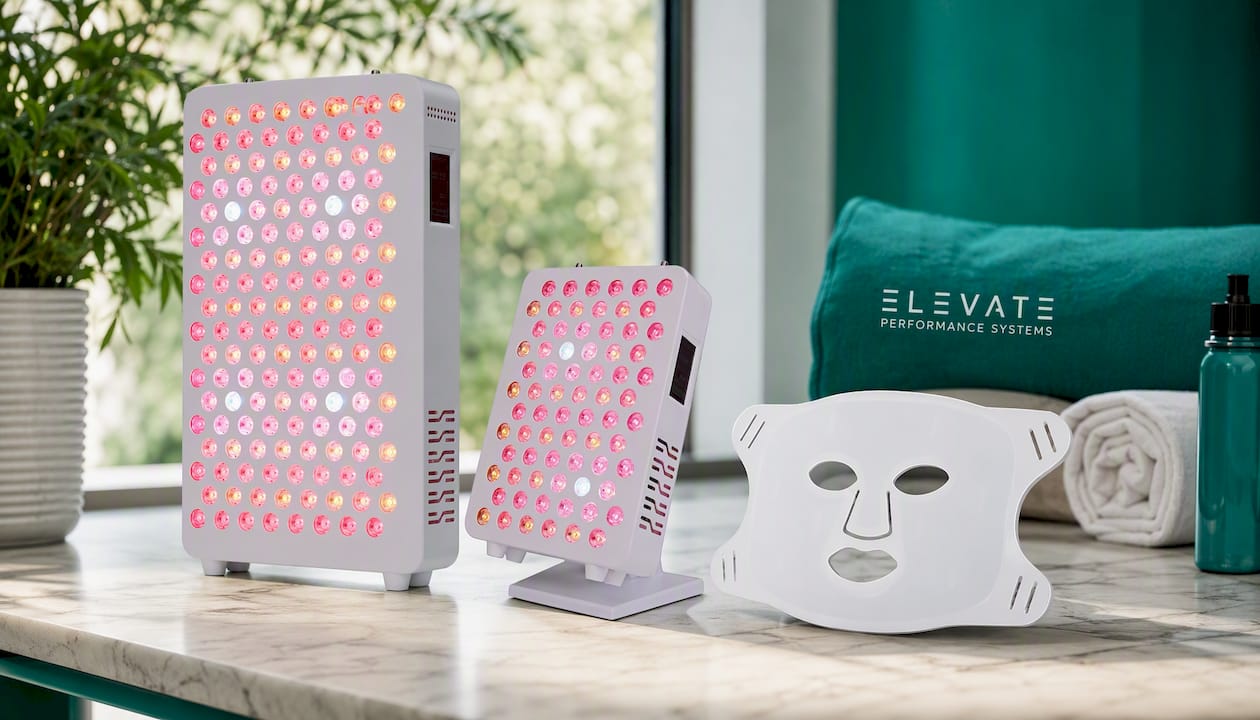
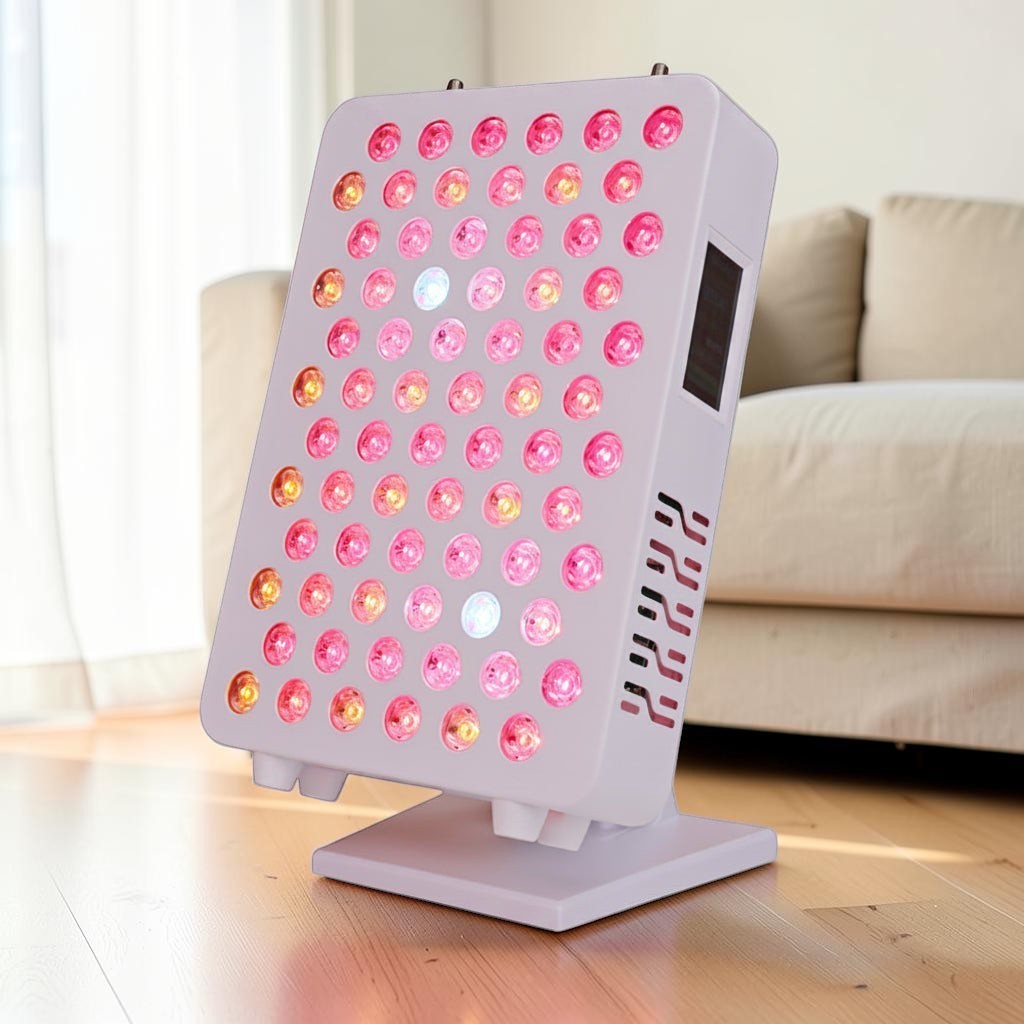
The Performance Red Light Therapy Panel is built for readers who want full-body coverage for larger muscle groups and deeper recovery work, pairing red and near-infrared wavelengths in one unit. If space or budget is the priority, the Compact Red Light Therapy Panel delivers the same wavelength combination in a smaller footprint suited to targeted body areas or tighter rooms. For facial skin goals specifically, the Elevate Red Light Therapy Face Mask is contoured for even coverage across facial curves, something a flat panel can’t match.
Eperformancesystems also builds custom recovery setups around your training goals, lifestyle, and budget rather than pushing one device at every customer, and that same personalized approach applies to combining red light therapy with other recovery tools like cold plunges or saunas. If you’re weighing training around a demanding schedule, it’s also worth reading how athletes manage recovery around period symptoms when timing sessions matters as much as the device itself. Check the spec sheet on any model you’re considering, compare it against the wavelength and dose figures covered in this guide, and pick the device that actually matches your goal.
Where to Verify the Research Behind Red Light Therapy
The clinical claims in this guide draw from peer-reviewed reviews and institutional summaries, and it’s worth checking the primary sources directly if you want to dig further into any specific claim.
- The PMC product guide on red light therapy breaks down device specs, wavelength tables, and what to look for before buying.
- UCLA Health’s overview of red light therapy benefits covers mechanism and common applications from a major academic medical center.
- Stanford Medicine’s commentary distinguishes photobiomodulation from photodynamic therapy and flags common claim confusion.
- The AMA’s patient guidance offers a clinician-facing caution on evidence quality.
- The umbrella review in Systematic Reviews summarizes meta-analyses across pain, wound healing, and hair loss outcomes.
- Clinicaltrials lets you search for registered, ongoing trials tied to specific wavelengths or devices.
This article is general information, not a substitute for advice from a qualified doctor. Consult a qualified healthcare professional about your own circumstances before acting on anything here.
Sources
- What to Look for in Red Light Therapy: A Product Guide Backed by Science — PMC
- 6 things patients should know about red light therapy — AMA
- Does red-light therapy work? What the research says — Scientific American