
Sauna training works for endurance athletes, and the effect size is bigger than most recovery habits deliver. Three weeks of post-exercise sauna sessions have improved treadmill time-to-exhaustion by 32%, translating to roughly a 1.9 to 2% gain in 5K times. The protocol behind that result: 20 to 30 minutes, 3 to 4 times a week, starting within 30 minutes of a workout. Athletes with heart, kidney, or blood pressure conditions should get medical clearance first.
TL;DR:
- Sauna sessions should be scheduled within 30 minutes after moderate workouts to maximize heat acclimation benefits.
- Three to four weekly sauna exposures of 20 to 30 minutes over three weeks can improve endurance performance and VO2max.
- Sauna protocols are most effective when used during base or preparation phases, ending at least seven days before a race.
- Athletes with heart, kidney, or blood pressure issues need medical clearance before starting sauna training.
- Infrared saunas require longer sessions, and at-home options offer flexible setups suitable for consistent heat acclimation.
Table of Contents
- What The Research Shows About Sauna Training For Endurance Athletes
- How Do You Build A Sauna Protocol That Actually Works?
- Who Should Skip Sauna Sessions Or Get Cleared First?
- When Should You Schedule A Sauna Block In Your Training Calendar?
- Traditional Sauna, Infrared, Or A Home Setup: What Fits Your Training?
- How We Approach Sauna Programming In Personalized Recovery Setups
- Home Sauna Options Built For This Protocol
- Sources
What The Research Shows About Sauna Training For Endurance Athletes
The foundational trial here is Scoon and colleagues’ 2007 study on competitive male runners. Participants added post-exercise sauna bathing three to four times weekly for three weeks. The result wasn’t subtle: time-to-exhaustion jumped 32%, and 5K performance improved by roughly 2%. That’s a meaningful shift for athletes chasing marginal gains through training alone.
A later trial on trained middle-distance runners found that intermittent post-exercise sauna bathing improved VO2max, lactate threshold speed, and thermoregulatory responses in both hot and temperate conditions. The mechanism matters as much as the outcome.
Sauna heat acclimation works through a few overlapping pathways:
- Plasma volume expansion — your blood plasma increases, improving cardiac output and oxygen delivery to working muscle.
- Improved thermoregulation — sweat response kicks in earlier and more efficiently, delaying the core-temperature rise that limits endurance output.
- Heat shock protein activation — thermal stress triggers HSPs that stabilize cells and support muscle recovery.
- EPO signaling — heat exposure appears to support erythropoietin activity, a piece of the same pathway altitude training targets.
A 32% improvement in time-to-exhaustion from three weeks of sauna bathing is a bigger swing than most supplement or gear investments produce. That said, the evidence has real limits. Sample sizes in these trials are small, some studies focused only on male runners, and long-term retention of the adaptation beyond a few weeks isn’t well mapped yet. Treat the numbers as a strong signal, not a guarantee.
How Do You Build A Sauna Protocol That Actually Works?
The protocol that produced measurable gains isn’t complicated, but timing and consistency matter more than intensity.
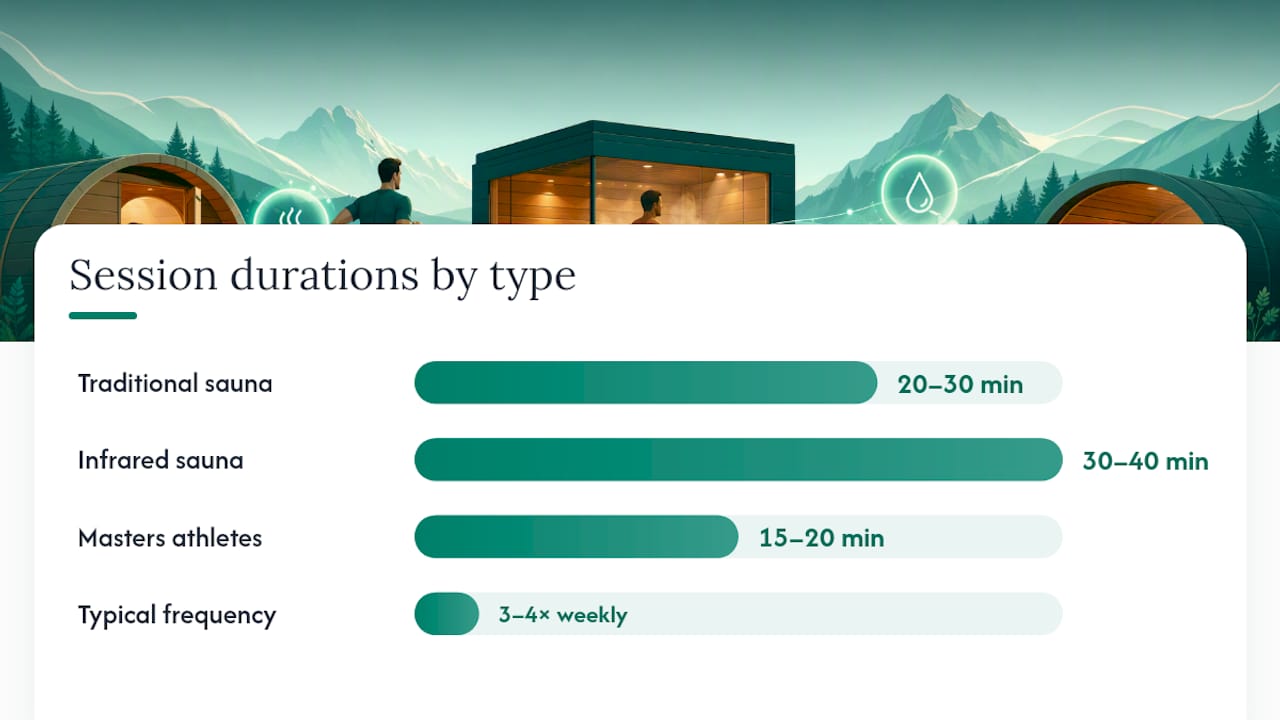
- Pick your temperature. Traditional saunas: 85 to 90°C (185 to 194°F). Infrared saunas run cooler, so extend sessions to 30 to 40 minutes to reach comparable thermal stress.
- Time your entry. Get into the sauna within 30 minutes of finishing a moderate workout, while your core temperature is still elevated. Starting cold blunts the adaptation.
- Hold your session length. 20 to 30 minutes for traditional heat, adjusted for how your body responds on session one and two.
- Repeat 3 to 4 times weekly. Adaptations typically begin appearing after 10 to 14 exposures, which lines up with a three-week block.
- Scale down for masters athletes. Start with 15 to 20 minute sessions and build up rather than jumping straight to 30.
Hydration matters as much as heat exposure. Pre-hydrate before you go in, avoid chugging large volumes of fluid mid-session, and check urine color afterward as a rough gauge of fluid status.
Pro Tip: Track resting heart rate and rate of perceived exertion each morning during your sauna block. A creeping resting HR or workouts that feel harder than they should are early signs you need an extra rest day before your next session.
Who Should Skip Sauna Sessions Or Get Cleared First?
Sauna heat exposure is a real physiological stressor, and it isn’t appropriate for everyone without a doctor’s input first.
Get medical clearance before starting if you have any of the following:
- Cardiovascular disease or uncontrolled hypertension
- Kidney disease or a history of electrolyte disorders
- Pregnancy
- Any condition affecting your ability to sweat or regulate fluid balance
Harvard Health’s guidance on sauna use recommends this clearance step specifically for cardiovascular, kidney, metabolic, or electrolyte concerns.
Stop a session immediately if you feel lightheaded, notice chest pain, or your heart rate stays elevated well past what the heat alone should cause. Simple checks work fine here: rate your perceived exertion, do a quick pulse check, and glance at urine color before and after. If any of those flags come up, shorten future sessions to 15 to 20 minutes, drop the temperature, and add more recovery time between exposures. Older athletes generally benefit from starting conservative on all three variables.
When Should You Schedule A Sauna Block In Your Training Calendar?
Sauna blocks fit best during specific windows, not scattered randomly across a training year.
- Run your block during base or preparation phases, when you can absorb the extra heat stress without competing against race-specific intensity work.
- Stop 7 to 10 days before your key race. The adaptations hold, but you want freshness, not accumulated fatigue, heading into competition.
- Cap yourself at 2 to 3 blocks per year. Coaches and exercise physiologists generally recommend spacing blocks 4 to 6 weeks apart at minimum to avoid diminishing returns.
- Pair sessions with moderate or tempo workouts, not long depletion runs or hot-environment doubles that already tax your recovery capacity.
Overlapping a sauna block with your heaviest training weeks is the most common mistake. The heat stress adds up on top of training load, and the combination can suppress performance rather than sharpen it.
Traditional Sauna, Infrared, Or A Home Setup: What Fits Your Training?
Traditional and infrared saunas both drive heat acclimation, but they get there differently. Traditional units run hotter and shorter, generally 85 to 90°C for 20 to 30 minutes. Infrared units run cooler and require longer sessions, often 30 to 40 minutes, to produce a similar thermal load.
Access matters too. Gym saunas work if your schedule lines up with theirs, but a three-week block of 3 to 4 sessions a week is hard to maintain around someone else’s hours. Portable tents offer a low-cost entry point. At-home cabins solve the scheduling problem outright, provided you’ve got the space and basic ventilation sorted.
For athletes building a dedicated setup:
- A traditional cedar sauna suits runners and cyclists who want the full high-heat experience for race-prep blocks.
- A compact, portable unit fits athletes with limited space or frequent travel.
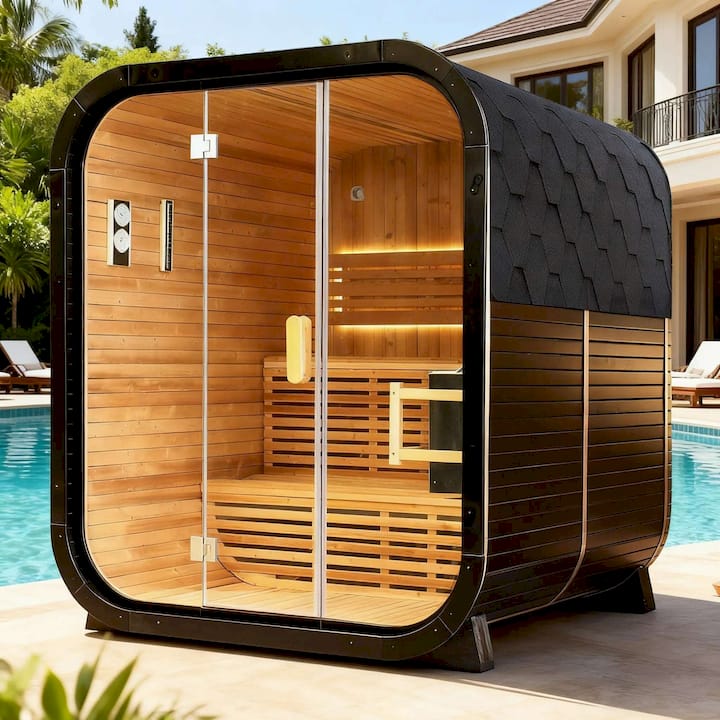
- A smaller premium cabin works for anyone who wants a tighter footprint without sacrificing build quality.
How We Approach Sauna Programming In Personalized Recovery Setups
Sauna gets prioritized first for runners and cyclists building toward a specific race, since the time-to-exhaustion gains are the most directly performance-linked benefit we see. For general fitness or recovery goals, we often combine it with cold plunge protocols or red light therapy instead. The right mix depends on your training calendar, your space, and your budget. Talk to us before building your setup.
— Derek
Home Sauna Options Built For This Protocol
Running a real sauna heat-acclimation block means having consistent access, not squeezing sessions in around a gym’s hours. Some companies build that access into your home, matched to your space and training goals instead of a one-size-fits-all box.

The Cedar Haven Sauna delivers the full traditional high-heat experience for athletes running race-prep blocks at 85 to 90°C. Tight on space or traveling often? The Ember Mini Sauna gives you the same protocol in a portable footprint. If you want a smaller cabin with a more refined finish, the Noir Cube Sauna covers that ground without the bulk of a full-size unit. Orders may include installation guidance and aftercare support, to help your sauna use start on schedule instead of being stalled behind setup questions. Browse the full sauna lineup or check the heating guide to find your fit, then place your order to start your first block this training cycle.
Sources
- Effect of post-exercise sauna bathing on the endurance performance of competitive male runners
- Passive heating: reviewing practical heat acclimation strategies for endurance athletes
- Sauna training for runners
- Intermittent post-exercise sauna bathing improves markers of exercise capacity in hot and temperate conditions in trained middle-distance runners