
Saunas use dry heat at high temperatures and carry the stronger research base for long-term cardiovascular benefits. Steam rooms use moist heat at lower temperatures, and they tend to feel gentler while offering quicker relief for congestion and skin hydration. Your choice comes down to what you’re solving for: heart health and longevity favor the sauna, while short-term respiratory or skin comfort often points you toward steam.
TL;DR:
- Regular sauna use is strongly linked to long-term cardiovascular health benefits, especially when used four to seven times weekly over many years.
- Steam rooms provide immediate relief for congestion, skin hydration, and respiratory comfort but lack the extensive long-term health data of saunas.
- Wet heat in steam rooms causes higher physical strain, heart rate, and core temperature increases than dry sauna heat, even at lower temperatures.
- Both modalities can be safe for healthy adults with short sessions, proper hydration, and medical consultation if necessary for existing health conditions.
- Alternating sauna and steam room sessions, starting with short durations, can optimize recovery benefits and tolerate multiple weekly visits.
Table of Contents
- Sauna vs Steam Room: How Each One Generates Heat
- Steam Room vs Sauna Benefits: What the Research Actually Shows
- Sauna and Steam Room Safety: Who Should Be Careful
- Which Is Better, Sauna or Steam Room, for Your Specific Goal?
- Elevate Performance Systems on Building a Sauna Habit at Home
- A Practical Note on Choosing Between the Two
- Bring the Sauna Habit Home With Elevate Performance Systems
- Sources
Sauna vs Steam Room: How Each One Generates Heat
The core difference between these two rooms is moisture, not just temperature. A sauna heats dry air at high temperatures typically ranging from low to mid hundreds of degrees Fahrenheit, with humidity sitting in the single digits to around 20%. A steam room works the opposite way: humidity runs near 100%, but the air temperature stays much lower, often around body temperature or slightly warmer.
That gap in humidity changes how your body experiences the heat. Water vapor conducts heat to your skin more efficiently than dry air, so a steam room at 115 degrees can feel just as intense as a sauna running 60 or 70 degrees hotter. Saunas themselves come in a few varieties worth knowing:
- Traditional (wood-burning or electric) saunas heat the air around you using a stove or heater, producing classic dry heat.
- Infrared saunas use infrared panels to warm your body directly rather than heating the surrounding air, often at lower ambient temperatures.
- Steam rooms rely on a generator that boils water and pumps vapor into a sealed, tiled room.
What this means practically: a sauna gives you a drier, easier-to-breathe heat that many people can tolerate longer. A steam room delivers a heavier, faster-acting heat that raises your core temperature quickly, which is part of why short steam sessions can feel more demanding than they look on a thermometer, according to GQ’s breakdown of sauna and steam physiology.
Steam Room vs Sauna Benefits: What the Research Actually Shows
The evidence gap between these two modalities is bigger than most comparisons let on. Regular dry sauna use has a genuinely robust research base behind it. A 2024 review found associations between frequent sauna bathing and reduced risks of hypertension, cardiovascular disease, and dementia, with stronger associations showing up in people who used a sauna multiple times per week. Related cohort work has repeatedly linked sessions taken four to seven times weekly to the biggest cardiovascular payoff, largely drawn from long-running Finnish population studies.
Steam room research tells a thinner story. The benefits are real but mostly short-term and mechanistic: humid air loosens mucus, eases breathing during congestion, and hydrates skin while you’re in the room, according to patient-education guidance from Acibadem Hospitals Group. Nobody has produced the decades-long population data for steam that exists for sauna use.
The physical strain difference is measurable. A 2014 physiological study comparing dry and wet heat found steam conditions produced a physical strain index of 5.7, versus 4.83 for dry heat, along with larger jumps in heart rate and rectal temperature. Wet heat pushes your body harder, faster, even at a lower air temperature.
Here’s how the two stack up on specific outcomes:
- Cardiovascular health: Sauna has the stronger, longer-tracked evidence; steam produces a sharper short-term heart-rate response but lacks comparable long-term data.
- Respiratory comfort: Steam tends to win here, since humidity loosens congestion in a way dry heat doesn’t.
- Skin hydration: Steam’s moisture gives it an edge for immediate skin comfort.
- Recovery and muscle relief: Both offer temporary relief, though neither should be mistaken for a substitute for structured recovery work.
Some of what steam offers is genuinely durable, like eased breathing during a cold. Other claims, like sweating out toxins, don’t hold up. Clinical guidance from Cleveland Clinic is blunt on this point: your liver and kidneys handle detoxification, not your sweat glands.
Sauna and Steam Room Safety: Who Should Be Careful
Both rooms are safe for most healthy adults, but the risks are real enough to take seriously.
- Watch for warning signs. Dizziness, nausea, heart palpitations, or a pounding headache mean it’s time to leave immediately, not push through.
- Check with a doctor first if you’re pregnant, have uncontrolled blood pressure, heart disease, or you’re recovering from a recent illness or fever. Cleveland Clinic frames both modalities as supportive wellness tools, not treatments, which matters most for anyone with an existing condition.
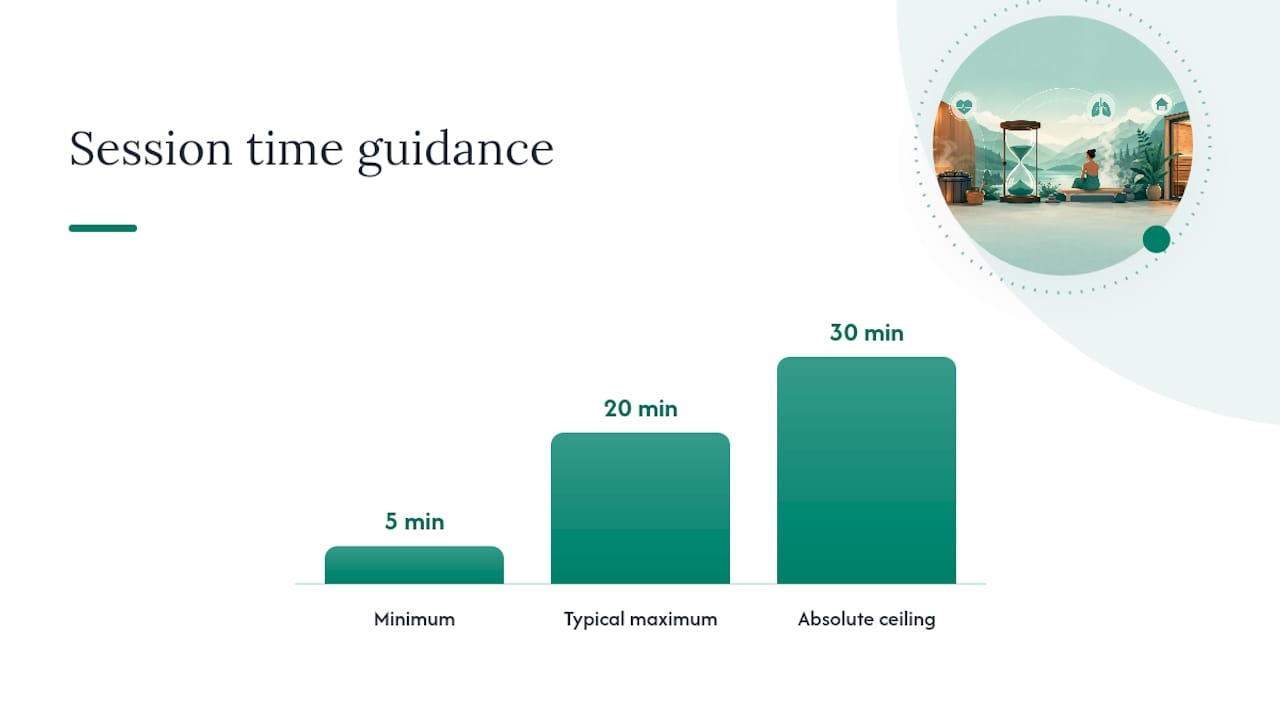
- Keep sessions short. Most guidance points to 5 to 20 minutes per visit, with 30 minutes as a hard ceiling for a single sitting.
- Rehydrate before and after. You lose fluid fast in both environments, and steam’s moisture-related infection risk makes footwear in a steam room worth the small inconvenience.
Pro Tip: Skip alcohol before either session. It speeds up dehydration and can mask the early symptoms that would otherwise tell you to step out.
Cool down gradually after either room rather than jumping straight into a cold shower. Give your heart rate a few minutes to settle first.
Which Is Better, Sauna or Steam Room, for Your Specific Goal?
There’s no universal winner here. The right pick depends entirely on what you’re trying to accomplish.
- Chasing long-term cardiovascular health? Go with the sauna. It has the deeper, more consistent research trail, and regular use several times a week is where the association with lower cardiovascular risk shows up most clearly.
- Dealing with congestion, dry skin, or sinus pressure? Steam room. The moisture works faster on those specific complaints.
- Recovering after a hard training session? Either works for temporary muscle relief, though many people find dry heat more comfortable for longer sessions.
- Just want to unwind? Personal tolerance matters more than research here. Some people find steam’s thicker air claustrophobic; others find dry sauna heat too sharp on the lungs.
You don’t have to pick one forever. Alternating them, sauna one day and steam another, or steam first to open airways followed by a shorter sauna session, works fine as long as you space sessions out and rehydrate between them. If you’re new to either, start with 10 minutes and build tolerance gradually before extending your stay.
Elevate Performance Systems on Building a Sauna Habit at Home
Access is often the real barrier between knowing sauna use helps and actually doing it consistently. Personalized recovery equipment considerations extend the sauna conversation beyond just temperature ranges to what can be realistically used several times a week.
A few things worth weighing before buying a home sauna:
- Heating speed matters more than most buyers expect, since a unit that takes 45 minutes to warm up quietly kills consistency.
- Footprint and installation determine whether a sauna fits your space without a renovation.
- How it fits your broader recovery stack matters too. Pairing sauna heat with a cold plunge or red light therapy session gives you more than one recovery lever to pull.
Elevate Performance Systems’ guide to choosing a fast-heating home sauna walks through these tradeoffs in more detail.
A Practical Note on Choosing Between the Two
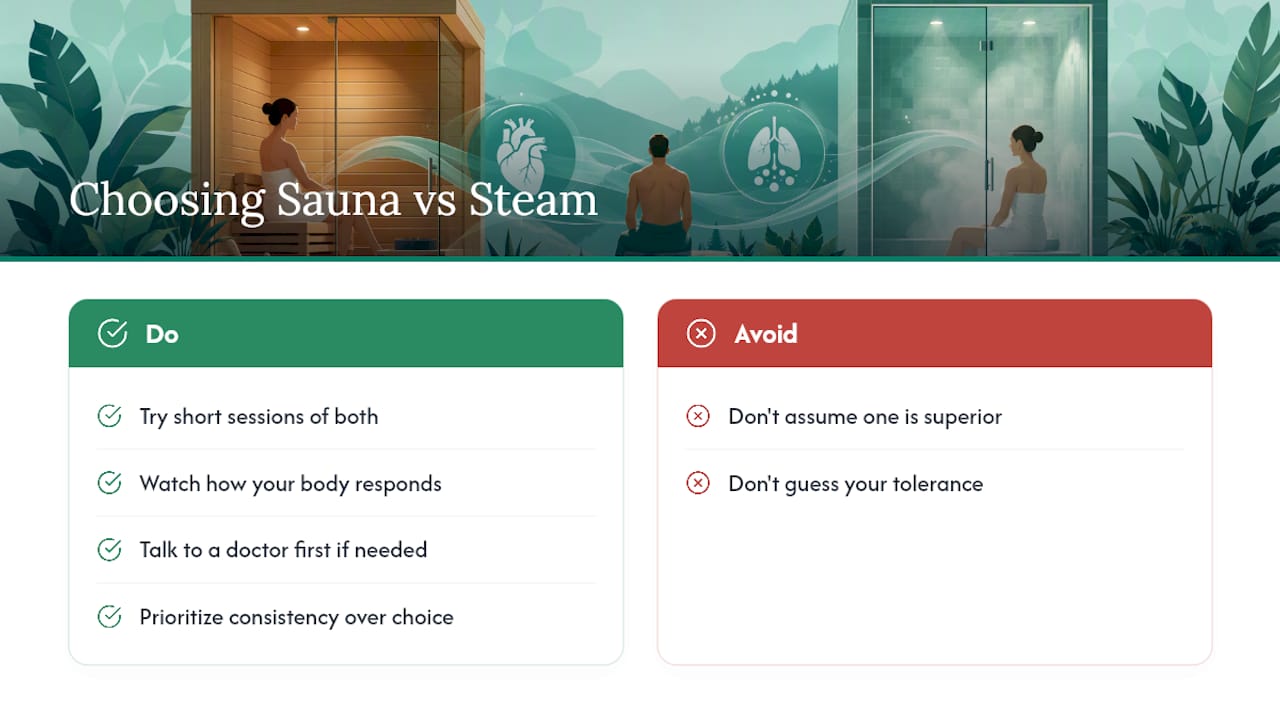
Both modalities deserve a place in a serious recovery routine, and I’d push back on anyone who insists one is universally superior. The data leans toward sauna for long-term cardiovascular payoff, but that doesn’t make steam a lesser tool. It makes it a different one, suited to different moments.
If you’re new to either, don’t guess your tolerance. Try short sessions of both, watch how your body responds, and talk to a doctor first if you have any cardiovascular or respiratory condition. Consistency will matter more than which one you pick.
— Derek
Bring the Sauna Habit Home With Elevate Performance Systems
Consistency is what makes sauna use pay off, and that’s hard to maintain if you’re driving to a gym or spa every time. Some companies solve the access problem with sauna options built for real homes and routines instead of one-size-fits-all installations.

The EMBER MINI SAUNA fits small spaces without sacrificing heat performance, a solid entry point if square footage is tight. The CEDAR HAVEN SAUNA is built for people who want a premium, professional-grade setup at home. The NOIR CUBE SAUNA is the pick for anyone who wants their recovery space to look as sharp as it performs. Browse the full sauna collection to compare sizing, heating speed, and installation needs against your own space and budget. If you’re ready to build a sauna habit you’ll actually stick with, start by checking which model fits your room.
This article is general information, not a substitute for advice from a qualified doctor. Consult a qualified healthcare professional about your own circumstances before acting on anything here.
Sources
- Sauna bathing and health outcomes: systematic review (2024)
- Sauna benefits and safety — Cleveland Clinic